
Workspace and Support for Asia related Projects at NIAS, Copenhagen
a report by Mette Gabler
About the programme
Twice a year the Nordic Institute of Asian Studies (NIAS) is open for applications to join the NIAS team for two weeks (deadlines: June first and October first). Students mainly from universities belonging to the nordic NIAS Council (NNC) are invited to send in short project descriptions and if chosen, to work at the NIAS offices and gain access to resources and networks provided by the NIAS team. The focus is on supporting current work of Master students or Ph.D. candidates who’s work relates to Asian studies.
As part of the NIAS Support Programme for Asian Studies (NIAS SUPRA) that includes different forms of support towards researchers, the NIAS SUPRA Nordic scholarship is one of the most important features of NIAS. This scholarship includes the provision of a workspace at NIAS in Copenhagen, Denmark, and accommodation at the Nordisk Kollegium (Noko) including full board for two weeks. Students from institutions belonging to NNC will also have their travel expenses covered.
One particularly helpful feature of the NIAS SUPRA Nordic scholarship is the access to the NIAS‘ digital library and other resources through the NIAS Library and Information Centre (NIAS LINC), a specialised digital library servicing the Nordic Asian studies community, and the asiaportal. Through the IP address many materials from the University of Copenhagen and NIAS press are accessible and even open for download in PDF form (publications from NIAS press where available in print at a discount). In addition, a wish list for literature was sent before arrival and accommodated by the NIAS staff, providing me with a pyramid of books to be reviewed. This secured an easy start and perfect foundation for productive work.
My stay at NIAS
I arrived at the NIAS offices early Monday morning on September 26 with my stay to end October 9, and was greeted by one of the NIAS student assistants that coordinate the stay of and communicate with the SUPRA students (always in pairs, me and a colleague from Norway) before and during the stay. The arrival was signified by a welcoming nature and friendliness. The communication prior to the stay was comprehensive, informative and helpful, and in combination with the introduction to the offices and staff provided an energising environment.
During the first week, each of the SUPRA students presented their work during the “Lunch Talk”. This is a chance to share the topic including current questions and issues with the staff and researchers at NIAS, and in turn get constructive feedback and suggestions for further steps to take.
Throughout the stay, I was welcome to attend any of the events that were hosted by NIAS, including presentations and programs focussing on topics related to Asian studies. Among them a presentation by the former Foreign Minister of the Republic of Indonesia H.E. Dr. Hassan Wirajuda on the South China Sea dispute (Who Controls Murky Waters in the South China Sea?) followed by other expert speakers and an open discussion between the participants and the audiences, and a full-day program with presentations and discussions between colleague from Fudan University and University of Copenhagen on China’s New Diplomacy and voices emerging through Chinese social media.
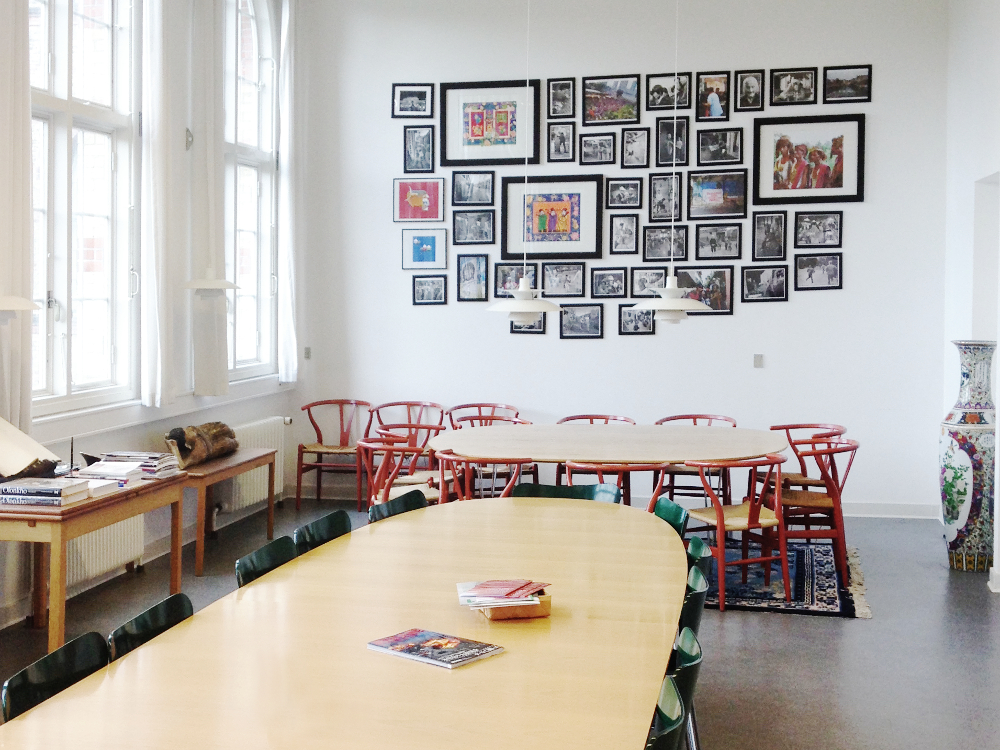
I thoroughly enjoyed my stay at NIAS. Due to a highly comfortable workspace and very helpful people, the environment and input motivated my work and enabled me to move forward.
(picture by Mette Gabler)
Film review by Salma Siddique
In the summer of 2014, I casually browsed through the Bollywood section at a DVD rental shop in Innsbrucker Platz. The selection seemed mostly governed by one factor, Shah Rukh Khan. Every film starring the actor in a lead role in the last two decades was in the collection, including a highly-forgettable Shakti (2002). Given Deutschland’s demonstrable love for the indefatigable star, I certainly expected more than fourteen people – eleven women and three men – in a Wedding Kino for the last day, last show of Fan (2016) this spring in Berlin. Perhaps SRK’s transnational fans thought it too early to take their heads out after the recent sandstorm Dilwale (2015).
https://www.youtube.com/watch?v=nkS_Ar0Yad0
Fan dramatically explores the all-consuming passion of an obsessed fan whose star-worship acquires a stalking, destructive hue after being ‘spurned’ by his screen idol. Twenty-five-year-old Gaurav Channa runs an Internet café in (what is implicitly a refugee colony of) New Delhi and bears an uncanny resemblance to the film star Aryan Khanna, both roles played by a fifty-year-old Shah Rukh Khan. Mostly content with imitating Aryan at local events and staring agog at the star’s photographs plastered on the bedroom walls, Gaurav dreams of meeting the star someday even if for five minutes. When he wins a cash prize at a neighbourhood talent night, which involves performing an Aryan routine, Gaurav decides to go to Bombay just like Aryan did many years ago: without a train ticket and checking into the same hotel room. Things take an awry turn when Gaurav threatens an upcoming star, who has been at loggerheads with Aryan Khanna. Instead of acknowledging Gaurav’s devotion and agreeing to grant him a rendezvous, Khanna distances himself from this fan and reports him to the police. Gaurav is more broken by his idol’s betrayal than the beating he receives in police custody. What follows is his extended transnational revenge on the star, where deploying his facial and performative likeness, Gaurav delivers one iconoclastic blow after another to Aryan’s star image, forcing the star to pursue his fan across Dubrovnik and Delhi rooftops alike.
Outwardly self-reflexive about stardom and fandom with its numerous mise en abyme moments, Fan is hardly a first as far as takes on Shah Rukh’s stardom are concerned (Billu, Om Shanti Om) and is another addition to the spate of double/multiple roles (Duplicate, English Babu Desi Mem, Paheli, Om Shanti Om, Rab Ne Bana Di Jodi and Don). What is certainly unprecedented about Fan are its confrontations with the aging star body and refutation with technology and performance. If Khan’s body has been symbolic of irrepressible energy and stamina, it has also been a site of injuries and enduring pain. It is the play on the potential and limits of Khan’s star body that makes Fan fascinating. Gaurav Channa was achieved through a physical transformation of the star involving weight-reduction, prosthetic make-up as well as special effects that made the transformation seamless and creaseless. Yet despite physical and virtual prostheses, twenty-five-year-old Gaurav’s agile moves and sprints are infused with a kinesis and mobility that have been central to Shah Rukh Khan’s performance.
Fan is a rich film text (one where everyone will find what they are looking for!), most obviously a commentary on the egoistic twins of stardom and fandom. It has a strong queer subtext, foraging on Khan’s rumoured bisexuality. A real-life, though not psychotic, fan and lookalike Raju Rahikwar supposedly inspired it. Most significantly, however, as the film meditates on his early success as a deranged and homicidal lover, it also ends up defamiliarising Shah Rukh Khan: it is not the unstable fan but the star who is more unpredictable of the two. As the key referent of the film, ‘Shah Rukh Khan’ emerges more plastic and air-brushed than his youthful doppelganger. In its replications and prostheses, Fan splinters the very star image it ostensibly thrives on. As tempting as it is to read (and in some cases react to!) Fan as ‘a star in descent’ film, Gaurav’s restless energy and lithe body signal new possibilities for aging and star mystique in a world of virtual bodies and mobility. For those watching Shah Rukh, picture abhi baaki hai mere dost (The film is yet to finish, my friend)!

Einen „Städtetrip zur Kunstmetropole Neu-Delhi“ hat das Magazin Monopol in der Ausgabe vom 27. Januar 2016 veröffentlicht. Jamila Adeli beschreibt in ihrem sehr lesenswerten Artikel die Orte und Stadtviertel, in denen zeitgenöissche Kunst eine immer wichtigere Rolle im Stadtleben Delhis spielt. Ebenfalls in diesem Themenspezial enthalten: ein Interview mit dem für seine Graphic Novels bekannten Künstler Sarnath Banerjee und eine Liste mit wichtigen Kunstorten in Delhi.
Wichtiger Hinweis zu diesem Artikel:
Wertende Begriffe wie „Kunstschickeria“ wurden nicht von der Autorin selbst verwendet, sondern nachträglich durch die Monopol-Redaktion in ihren Text eingefügt und ohne Rücksprache mit der Verfasserin gedruckt – im Original hatte Jamila Adeli stattdessen den Begriff „Kunstszene“ verwendet.
Link zum Artikel-PDF:
Ein Beitrag von Max Kramer
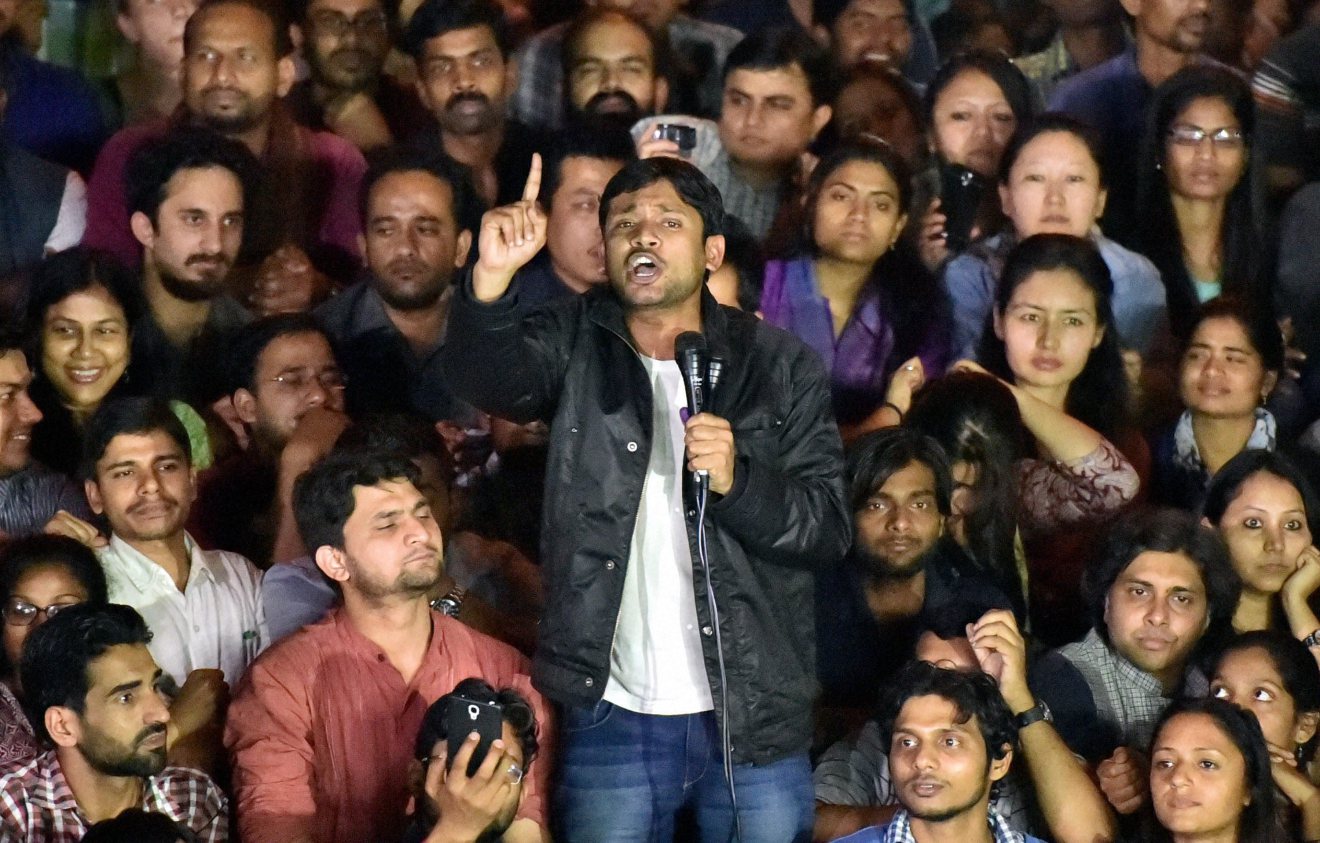
Die Studentenbewegung an indischen Hochschulen hat auf meiner Facebookseite einen Wirbelsturm an Debatten und Videos ausgelöst. Sie begann damit, dass in Reaktion auf einen nicht genehmigten Protest im Andenken an die kaschmirischen „Märtyrer“ Afzal Guru und Maqbool Bhat der Studentenführer der All India Student Federation, Kanhaiya Kumar, auf dem Campus der Jawaharlal Nehru University (JNU)in Neu-Delhi aufgrund von „sedition“ verhaftet wurde. „Sedition“ ist ein aus kolonialer Zeit stammender Begriff, der auf Deutsch Anstiftung zum Aufruhr bedeutet und zwischen Volksverhetzung und Hochverrat angesiedelt werden kann. Ursprünglich wurde das darauf bezogene Gesetz von den Briten angewandt, um indische Nationalisten wie Mahatma Gandhi von ihren politischen Kampagnen abzuhalten. Nach massiven internationalen Protesten, die sich um den Zustand der Demokratie und Redefreiheit in Indien drehten, wurde Kumar vor einigen Tagen wieder aus dem Gefängnis entlassen und hielt am 03. März eine Rede auf dem Campus der JNU. Diese knapp einstündige Rede auf Hindi/Urdu war eine rhetorische Meisterleistung. Sie begann und endete mit Slogans, die „Azadi“(Freiheit) von unterschiedlichsten Formen der Unterdrückung forderten: von der Kastenunterdrückung, von kapitalistischer Unterdrückung, von genderbezogener Unterdrückung usw. Dabei brachte er die politische Bewegung des Mitautoren der indischen Verfassung und Dalit-Anführers Bhimrao Ramji Ambedkar mit traditionelleren linken Ansätzen unter einen Hut. Er flocht fließend Wortspiele in seine Rede ein und berichtete von seinen „Erfahrungen im Gefängnis“, die er halbironisch als Solidaritätserlebnis mit den berüchtigten Polizisten Delhis schilderte. Schließlich seien er und sie aus der gleichen Klasse und an Solidarität fehle es vielleicht nur aufgrund von Übersetzungsschwierigkeiten. Ganz in diesem Sinne fordert er die JNU-Studenten auf, ihre theorielastige Sprache zu überdenken, da sie unter den Zielgruppen ihrer Politik, den Bauern, Armen und Ausgestoßenen schlecht verstanden werde. Kumars Rede macht momentan auf sozialen Netzwerken die Runde. Einige Kommentator_innen sehen mit Kumar einen neuen Stern am Himmel sozialer Bewegungen in Indien aufgehen.
Was ist aber dieses Wort „Azadi“ und wie steht es zu den jüngsten Ereignissen?
Kumar wurde nach einer Kundgebung von vorwiegend kaschmirischen Studierenden an der JNU verhaftet, die, wie schon viele Male zuvor, das Recht auf politische Selbstbestimmung der Region öffentlich eingefordert haben. „Politische Selbstbestimmung“ ist eine recht bekannte Bedeutung von Azadi, die offen lässt, ob es sich um einen Anschluss an Pakistan, um Separatismus oder, seltener, um eine kooperative Lösung handelt. Solche Proteste sind an der JNU Teil des universitären Alltags. Ich selbst war auf etlichen dieser Demonstrationen anwesend, ohne dass die Polizei eingeschritten wäre. Dieses Mal jedoch entschieden sich regierungsnahe Akteure, daraus ein Medienereignis zu machen. Dieses Ereignis war aus Regierungsperspektive vielleicht eher kontraproduktiv, wenn man bedenkt, was für eine neue Sichtbarkeit Kumar dadurch gewann. Der am stärksten kommentierte Satz aus Kumars Rede nimmt die begriffliche Problematik von Azadi auf. Er lautete „Bharat se nahin, Bharat mem azadi mang rahe hain“ („Wir fordern nicht die Freiheit von Indien, sondern in Indien“).Viele von meinen „Facebook-Freunden“ stammen aus dem Kaschmirtal und sind mit der JNU assoziiert. Die Rezeption von Kumars Rede beschäftigte sich daher oft mit Hindi-Postpositionen (im Hindi stehen die Verhältniswörter hinter dem Wort, auf das sie sich beziehen): was ist mit ‚mem‘ (in, innerhalb) und was ist mit ‚se‘ (getrennt, instrumental) gemeint? Zum ‚mem’ kann neben Kumars Rede auch auf die gleichzeitig in Reaktion auf die Ereignisse ins Leben gerufenen Teach-In-Vortragsreihe an der JNU über Nationalismus hingewiesen werden. Dort erkunden einige Professor_innen der Universität die Potentiale „inklusiver nationaler“ Artikulation, meist in Bezug auf die klassischen Kandidaten Rabindranath Tagore und Mahatma Gandhi. Für viele Student_innen aus dem Kaschmirtal bedeutet ‚mem‘ allerdings immer noch den Einschluss in die Union. Eine föderale Lösung geht ihnen nach mehr als 25 Jahren militärischer Besatzung nicht weit genug. Mohamad Junaid, Anthropologe und Absolvent der JNU, erinnert sich, dass der Begriff Azadi erst seit den frühen 2010er Jahren eine ganze Reihe linker Artikulationen verknüpfte. Daher die Ambivalenz im Umgang mit ‚mem‘ und ‚se‘. In der Imagination vieler nationalistisch denkender Menschen ist Azadi noch ausschließlich die Forderung einer „eigensinnigen, von Terroristen durchdrungenen“ Region. Die Forderung stellt für sie eine ständige Bedrohung nationaler Integrität dar. Für Studenten wie Kanhaiya Kumar und für viele Feminist_innen in Indien und Pakistan war Azadi allerdings schon länger ein bekannter Slogan, der dem Wunsch zur Freiheit die richtige emotionale Tonhöhe mitgibt. Dieses Potential von Azadi besteht nun im Verhältnis zu Kaschmir darin, Gemeinsamkeiten in der Opposition zu einem verantwortungslosen politischen System und sedimentierter sozialer Machtbeziehungen zu artikulieren, die bislang nur selten einen gemeinsamen Nenner fanden. Auch im Kaschmirtal wurde von der Bevölkerung ein eintägiger Streik als Zeichen der Solidarität mit den Student_innen der JNU abgehalten. Mohamad Junaid führt die demokratischen Potentiale aus, die aus der neuen Pluralität von Azadi-Forderungen folgen könnten:
„Our responsibility is not to divest azadi of its plural meanings, but to affirm them all together. The power of azadi chants on JNU’s campus does not lie in watering it down to make it acceptable to the nationalist, upper-caste Indian bourgeoisie. It lies in its plural expressions; however difficult those expressions might appear. It lies in articulating the struggle for Dalit liberation within the Kashmiri Tehreek [Bewegung], the Kashmiri Tehreek within the Dalit struggle (both of which have happened in their own way), and the students’ struggles within the other two. There is no ‘proper’ azadi, or ‘clarification’ azadi. What kind of azadi can a court or a constitution give which can’t bear even a few harmless slogans? In any case, what kind of azadi is it if it does not even commit to causing a little discomfort among the powerful?“
Allerdings mahnen einige meiner kaschmirischen Freunde zur Vorsicht, da ihre Forderungen nicht „einfach“ in etwas Größerem aufgehen. Sie möchten auch ernst genommen werden, wenn sie „se“ sagen. Damit begann schließlich das Medienereignis in der JNU und erst in einer Reaktion darauf formulierte Kumar das inklusive ‚mem‘ seiner Rede. Ein Freund von mir postete auf Facebook, dass er hofft, diese Aneignung von Azadi führe nicht in die erweiterten Postposition von ‚se pahle‘ (vorher) und ‚ke baad‘ (danach), so dass die möglichen Transformationen einer ‚indischen‘ Studentenbewegung offen bleiben. Zuletzt fällt mir dazu ein, dass „se“ schließlich auch als „instrumental“ verwendet werden kann: erst durch diese Transformation einer „indischen“ Wahrnehmung des leidenschaftlichen Appells von Azadi kann das von vielen Kaschmiris erträumte „se“ als eine Form der Trennung im Einverständnis möglich werden (und dann vielleicht schon nicht mehr nötig sein).
Quelle Bild: Kamal Singh
Weitere Artikel-Links zum Thema:
- Schauspielerin Kalki Koechlin löst Diskussion auf Twitter aus durch ihr Statement zur Politik der Postposition/Azaadi
- ‚Azaadi In Bharat‘: A New Anthem, A New Political Star? NDTV, March 4, 2016
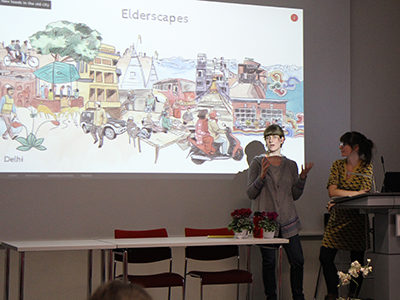
A Transmedia Project
by
Annika Mayer & Roberta Mandoki (Heidelberg University)
The project „Elderscapes. Ageing in Urban South Asia“ offers an insight into contemporary everyday life of older people from the middle class in urban South Asia. South Asia’s cities are growing rapidly, and longevity is rising simultaneously leading to urban and social change. In this process, perspectives of older people, but also their needs and potentials have to be considered. The project focuses on the social commitment of older persons, their everyday life and social bonding, on their memories as well as perspectives on what it means to grow old in a city.
Interweaving multiple media types like video, text, sound and images this transmedia project contributes both to contemporary visual anthropology and anthropological research on ageing.
http://www.asia-europe.uni-heidelberg.de/de/aktuelles/nachrichten/detail/m/website-and-project-launch-elderscapes.html
Nadja-Christina Schneider
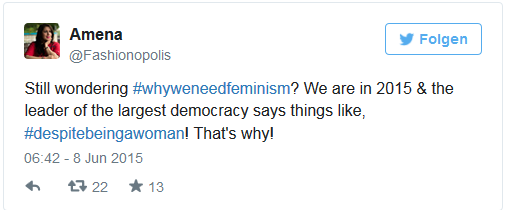
„Mahila hone ke baujud bhi“ – im Englischen mit „despite being a woman“ übersetzt – dieser selbstentlarvende Einschub in einer Rede, die der indische Premierminister Narendra Modi (BJP) Anfang Juni in Dhaka im Rahmen seines Staatsbesuchs in Bangladesch gehalten hat, sorgt seither für angeregte Diskussionen in der indischen Medienöffentlichkeit. Eigentlich wollte Modi darin das entschlossene Vorgehen von Premierministerin Sheikh Hasina im sog. Kampf gegen den Terror anerkennend hervorheben. Dies misslang ihm jedoch gründlich, denn eine unverändert patriarchale Haltung und unzeitgemäße Geschlechterstereotype sind nun die beiden ersten Assoziationen, die mit seinem denkwürdigen Auftritt in Dhaka in Verbindung gebracht werden. Unter dem Hashtag #despitebeingawoman postet seither eine stetig wachsende Zahl an Twitter-Userinnen und -usern ihre Kommentare und zahllosen Beispiele herausragender Leistungen und Errungenschaften von Frauen in Indien, aber auch satirische Inhalte und Karikaturen:
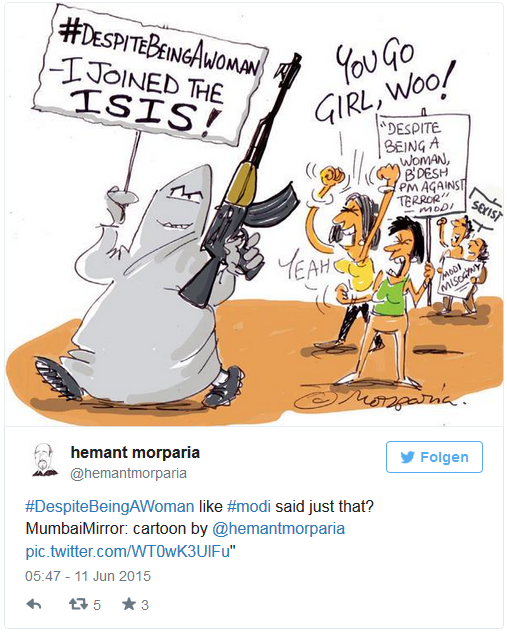
Bei der Vorstellung seines Kabinetts im vergangenen Jahr wurde der neu gewählte Premierminister teilweise noch überschwänglich von den Medien dafür gelobt, dass sich der Frauenanteil darin auf fast fünfzehn Prozent erhöht hatte und ein Viertel der Ministerposten mit Frauen besetzt worden waren. Die hindunationalistische indische Volkspartei (BJP) hatte sich generell aus wahlstrategischen Gründen in den vergangenen Jahren eine Rhetorik der Geschlechtergerechtigkeit zu eigen gemacht und vor allem im Wahlkampf 2014 eingesetzt. Insbesondere die säkular begründete indische Frauenbewegung beobachtet dies mit großem Unbehagen, denn zahlreiche Äußerungen und Handlungen von BJP-Mitgliedern sowie von anderen hindunationalistischen Organisationen im Umfeld der Partei sind nach wie vor kaum mit einem egalitären, liberalen Feminismus in Einklang zu bringen. Folglich bot Modi vielen, die an seinem überzeugten Engagement für eine gerechtere Geschlechterordnung in Indien stets gezweifelt haben, mit seiner Äußerung geradezu eine Steilvorlage, um seine patriarchale Haltung zu kritisieren und ihn mit Spott zu bedenken.
Twitter ist jedoch auch ein Medium, das Premierminister Modi selbst äußerst erfolgreich für seine strategische Kommunikation mit fast 13 Millionen Followern nutzt und so ließ die Gegen-Hashtag-Kampagne #ModiEmpowersWomen ebenfalls nicht lange auf sich warten. Viele englischsprachige Medien weltweit scheinen dennoch ausschließlich über den Hashtag #despitebeingawoman zu berichten, der vielfach als „social media storm“ bezeichnet wird, den Modi durch seine Äußerung entfacht habe.
Diese Skandalisierung und die wachsende Zahl an Berichten von Medien über das, was sich in den sozialen Medien tut, sagen auf der einen Seite viel aus über die rapide gewandelten Medienumgebungen und kommunikativen Dynamiken in der indischen Gesellschaft. Auf der anderen Seite lässt die starke Medienresonanz auf Modis Äußerung aber auch die Zentralität von genderbezogenen Themen in dieser gewandelten indischen Medienlandschaft erahnen. Es ist zwar keinesfalls neu ist, dass die Situation von Frauen, Diskussionen über Frauenrechte und Gleichberechtigung oder genderbezogene Diskriminierung ein sehr großes Interesse der indischen Medien und generell in öffentlichen Debatten allgemein erfahren, doch die Medienberichterstattung und daran anknüpfende Anschlusskommunikation hat sich zweifellos im Zuge der fortdauernden Debatte über sexuelle Gewalt seit 2012 stark verdichtet.
Film celebrates 50 years of Satyajit Ray’s sleuth
Perhaps few other characters in Bengali fiction stir as much feelings in the young and the old alike as Feluda, the detective personality created by Satyajit Ray. Feluda who came to life through a story in a children’s magazine in 1965, ‘turns’ 50 this year. A documentary tells his story. Text: Indrani Dutta/Suvojit Bagchi
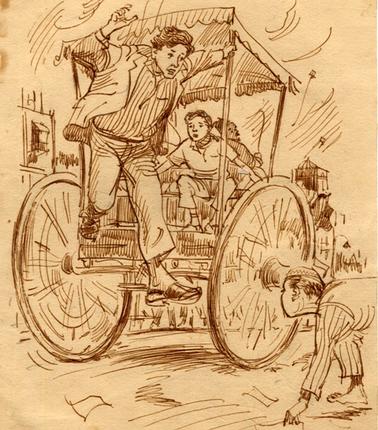
The first short story of Feluda, with sketches by Ray was published in 1965-66 in Sandesh, a children’s magazine. The maiden Feluda novella titled ’Badshahi Angti’ (The Emperor’s Ring) with more sketches by Ray appeared the same year. The magazine was launched in 1913 by Ray’s grandfather– writer, painter, printer Upendrakishore Raychowdhury. The editor’s mantle was donned later by Ray’s father, poet, illustrator and playwright, Sukumar Ray. (Courtesy: Ray Society)(Source: The Hindu, April 18)
Reader comment by Koel (The Hindu, April 20):
“Feluda – irreplaceable. I think he is the greatest tribute to the literary and intellectual middle class Bengali psyche”.
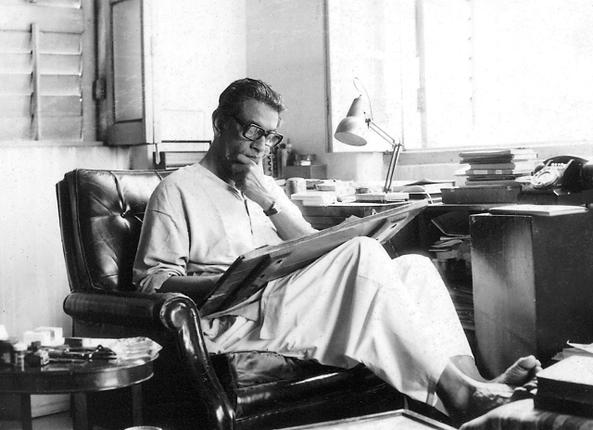
Writer and auteur, Satyajit Ray, created many of his characters sitting in this chair in central Kolkata’s Bishop Lefroy Road. One of his char-acters, Feluda, the quintessential Bengali gentleman sleuth, is com-pleting his golden jubilee later this year. (Courtesy: Ray Socie-ty)(Source: The Hindu, April 18)
Den vollständigen Artikel finden Sie auf thehindu.com
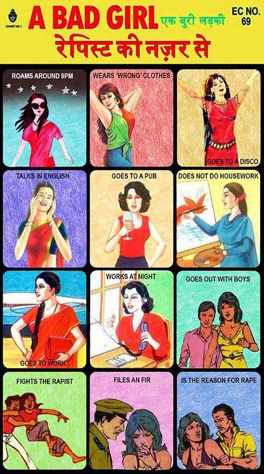 You’re a ‘bad girl’ if you fight rapists or go out with boys: New Meme
By: Meghna Malik, The Indian Express
Barely a month after the first ‘bad girl’ meme went viral on the internet, another ‘bad girl’ chart is doing the rounds on social media. The chart comes shortly after Leslee Udwin’s controversial documentary, ‘India’s Daughter’, which is based on the rape and murder of a 23-year-old student in December 2012. This documentary has been banned by the government of India.
Titled ‘Ek Buri Ladki – Rapist Ki Nazar se‘, this satirical chart shows 12 illustrations that depict the qualities of a bad girl, according to a rapist. Going by the chart, in the eyes of a rapist, a girl is a ‘bad girl’ if she roams around after 9 PM, fights the rapist or goes out with boys.
The chart further reads that a girl who talks in English, goes to a pub or files an FIR against the rapist is also a bad girl.
Quelle: http://indianexpress.com/article/trending/youre-a-bad-girl-if-you-fight-rapists-or-go-out-with-boys-new-meme/
Eine größere Version des Posters kann hier angesehen werden: bad-girl31
Sanjay Hegde (The Hindu, March 10, 2015)
For the past one week, we have been told that the documentary India’s Daughter has been banned. The truth, however, is different. The perusal of three documents involving official communication in the matter show that what has been temporarily restrained until further orders is the telecasting of an interview recorded with Mukesh Singh
On International Women’s Day, March 8, the news channel NDTV went blank with only a visual of a lamp, the words ‘India’s Daughters’ and a scroll running beneath it putting out statements issued by the Editors Guild of India and others. It reminded me of the blank editorial column in the Indian Express published on June 28, 1975. This page protested the censorship that was imposed following the promulgation of Emergency. The same week, the obituary column in the Times of India carried this entry: “D’Ocracy D.E.M, beloved husband of T. Ruth, loving father of L.I. Bertie, brother of Faith, Hope and Justice, expired on June 26.”
Emergency-era stories, of protesting censorship within the confines of the law need to be retold to a young India born since those dark days so that the message of the current protest acquires greater context and resonance. For the past one week, angry anchors, outraged politicians and the raucous discourse of public life have informed us that the documentary India’s Daughter has been banned. However, the truth is different. The documentary has not been banned. Yes, you read that right. What has been temporarily restrained until further orders is the showing of an interview recorded with the convict Mukesh Singh. This is the sequence of events.
Der vollständige Artikel aus The Hindu kann hier gelesen werden.
Sanjay Hegde ist Anwalt am Supreme Court in Delhi.
Unmittelbar vor dem internationalen Frauentag am 8. März ist die Debatte über das verhängte Sendeverbot gegen die BBC-Dokumentation „India’s Daughter“ (Regie: Leslee Udwin) weiterhin ein dominantes Thema in den indischen Medien. Die vielfach kritisierte Zensur hat die Debatte über sexuelle Gewalt neu belebt. Standen in der vergangenen Woche noch die Absurdität von Filmzensuren im Zeitalter digitaler sozialer Medien sowie die Äußerungen eines der angeklagten Täter im „Nirbhaya Gang Rape Case“ (zu diesem Thema: 2012 Delhi Gang Rape Case) im Vordergrund, so richtet sich der Fokus der Diskussion und Kritik nun verstärkt auf zwei Verteidiger, die im Film ebenfalls zu Wort kommen. Ihre Äußerungen haben die indische Anwaltskammer dazu veranlasst, sog. Show Case Notices zu erlassen, also Aufforderungen an die beiden Anwälte, die Beweggründe für ihr Verhalten darzulegen (zu diesem Thema: Show Cause Notice to Lawyers of Nirbhaya Case Accused).
Für den Indian Express kommentierte die indische Politikerin und Frauenrechtsaktivistin Brinda Karat die aktuelle Debatte in Indien:
FACE THE TRUTH
Written by Brinda Karat | Published on:March 6, 2015 12:00 am
India’s Daughter, the government need not be oversensitive about it.
The government repeated a charge made by a woman MP from the ruling party that this would “affect tourism”. This is rather like saying, save India’s reputation, not its women. It is sickening that the government should be concerned more about the loss of revenue and image rather than taking the right steps to make India safe for its women and children.
Den vollständigen Artikel können Sie hier lesen: http://indianexpress.com/article/opinion/columns/face-the-truth/3/
Der BBC-Dokumentarfilm kann hier angesehen werden.